Your cart is currently empty!.
You may check out all the available products and buy some in the shop.
Continue Shopping
Glutathione is the dominant intracellular antioxidant in mammalian cells, present at millimolar concentrations across most tissues. Its tripeptide structure combines glutamate, cysteine, and glycine through an atypical gamma-peptide bond at the glutamate residue. That unusual linkage keeps the molecule resistant to most cellular proteases, which is why intracellular pools remain stable under normal conditions.
The cysteine thiol group donates electrons to reactive oxygen species and oxidized protein residues, reducing them to harmless forms. The oxidized glutathione disulfide (GSSG) that results gets recycled back to active GSH by glutathione reductase using NADPH. A separate pathway uses glutathione as a conjugating substrate through glutathione S-transferases, tagging xenobiotics and reactive metabolic byproducts for excretion through bile or urine.
Joseph de Rey-Pailhade described the molecule in 1888, calling it philothion. Frederick Gowland Hopkins worked out its tripeptide structure in the 1920s. Its role in phase II detoxification was established through work at the NIH in the 1950s and has remained a staple of cellular biochemistry research since.
Published research literature covers the following areas:
LAR supplies this compound as a reference standard to qualified laboratories. No dosing schedules, administration methods, or human-use guidance is provided or implied.
Sealed vial: Stable at refrigerated temperatures (2–8 °C) for up to 24 months. Stable at room temperature (up to 25 °C) for 30 days during shipping.
After opening: Refrigerate at 2–8 °C and use within 30 days. Protect from light. Do not freeze after opening.
Visual check: Solution should remain clear. Discard if discoloration or precipitate appears.
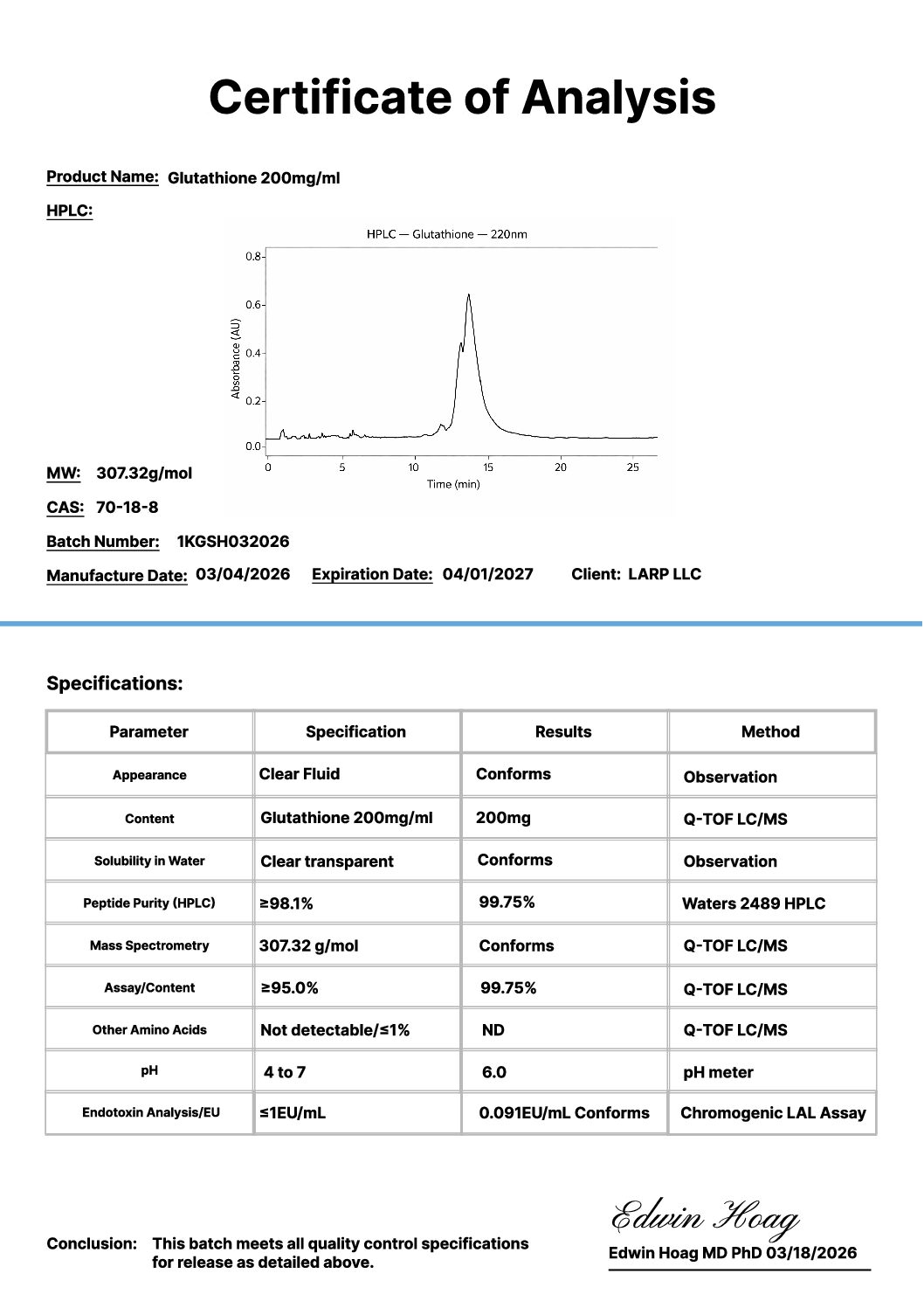
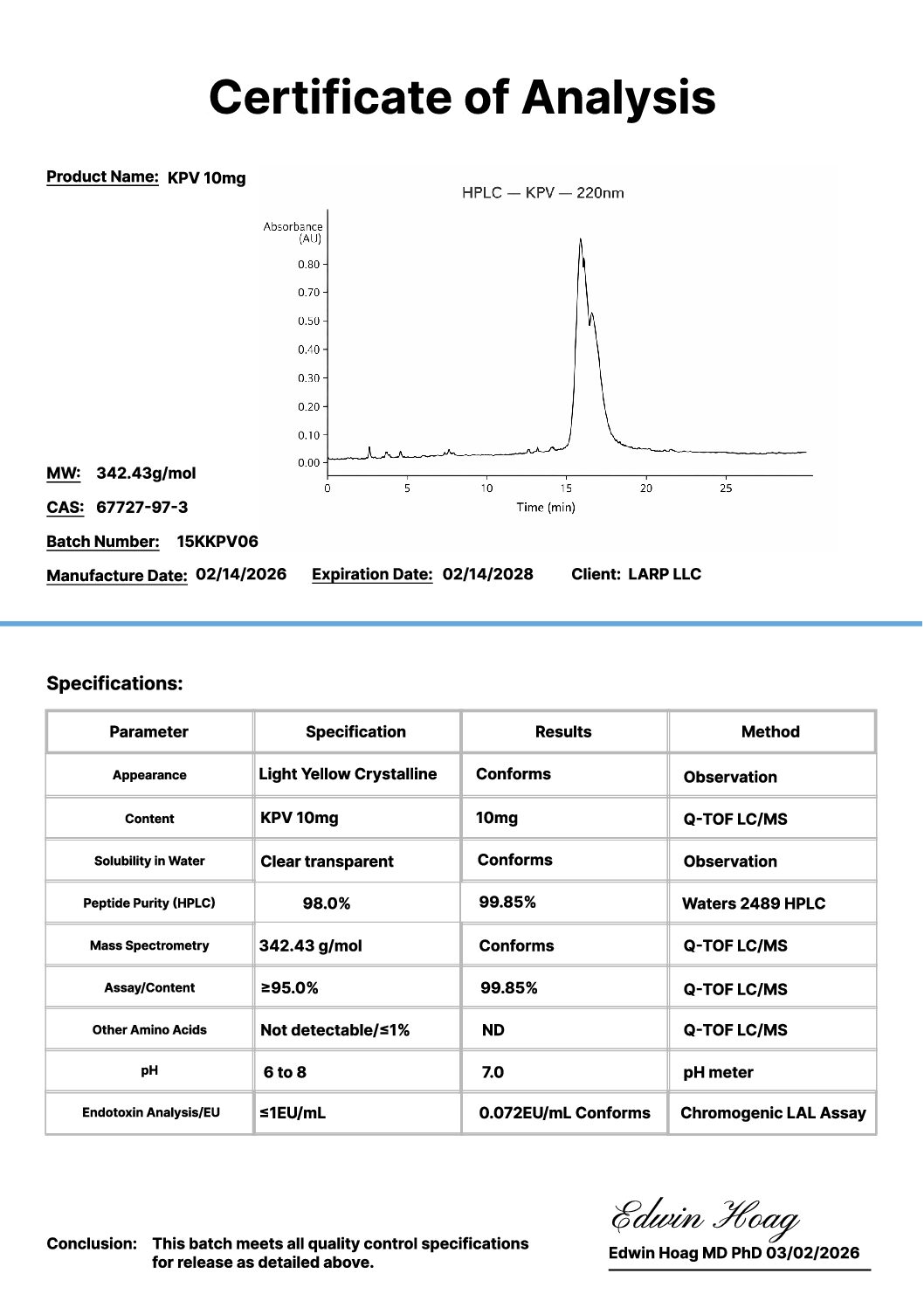
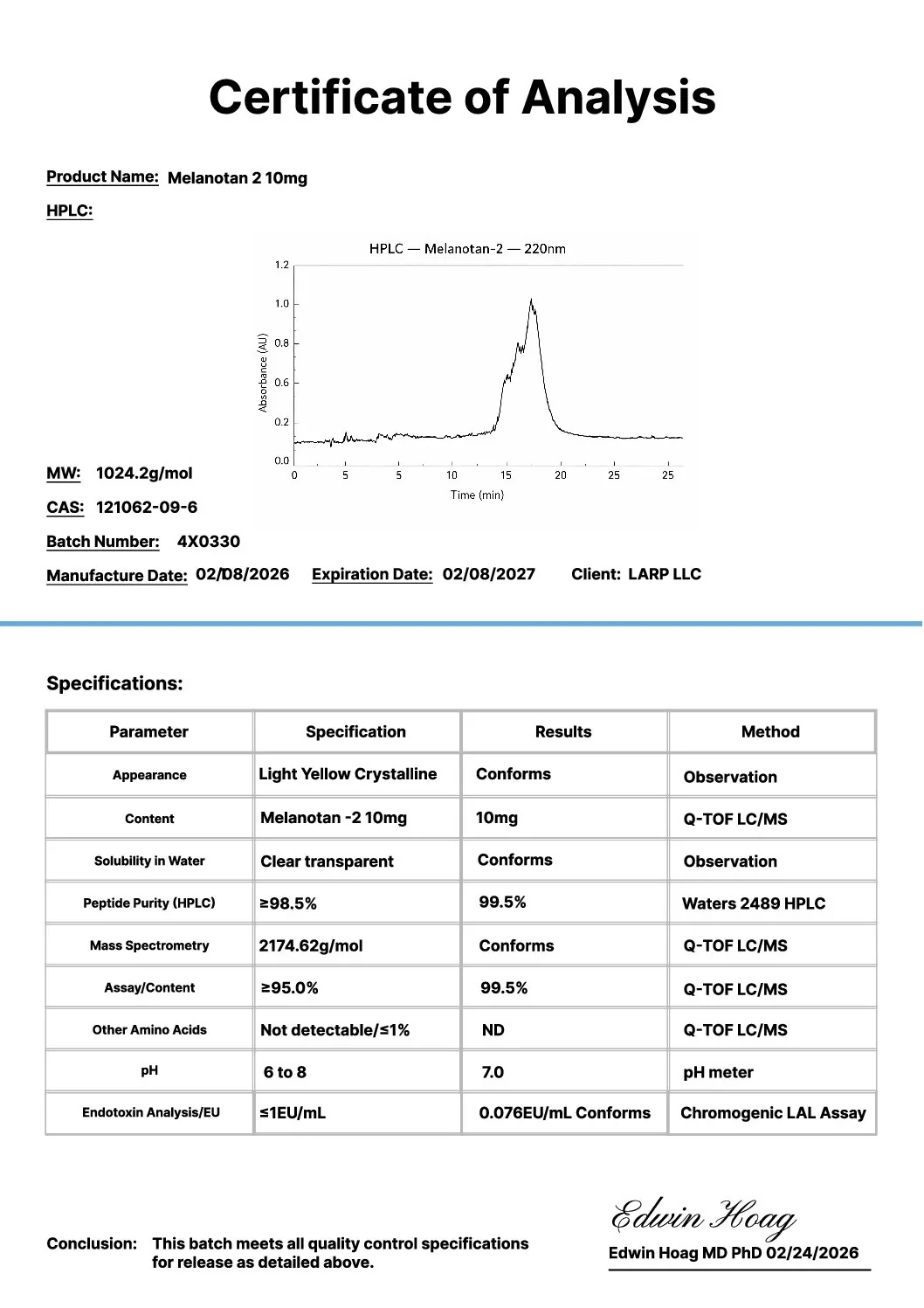
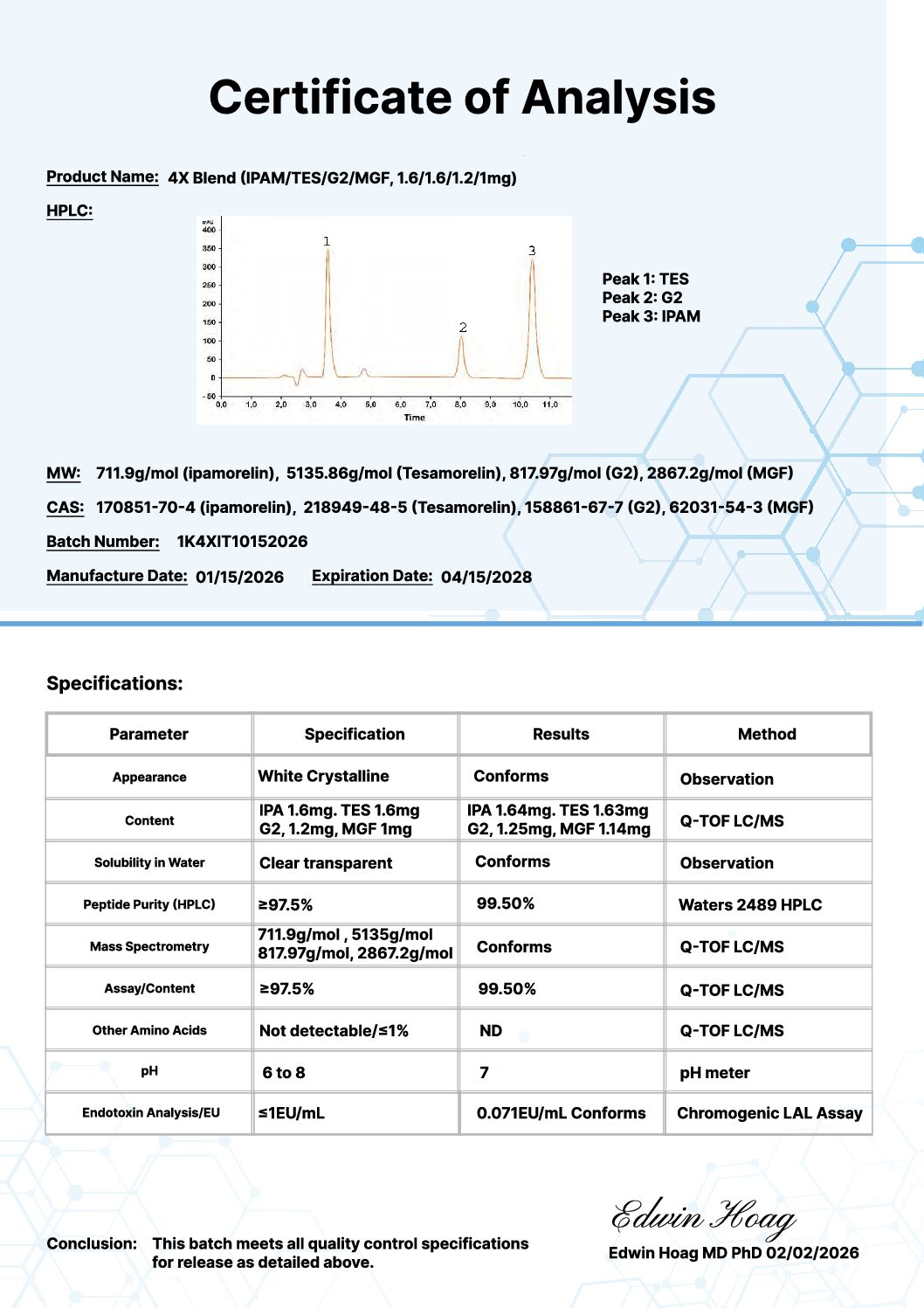
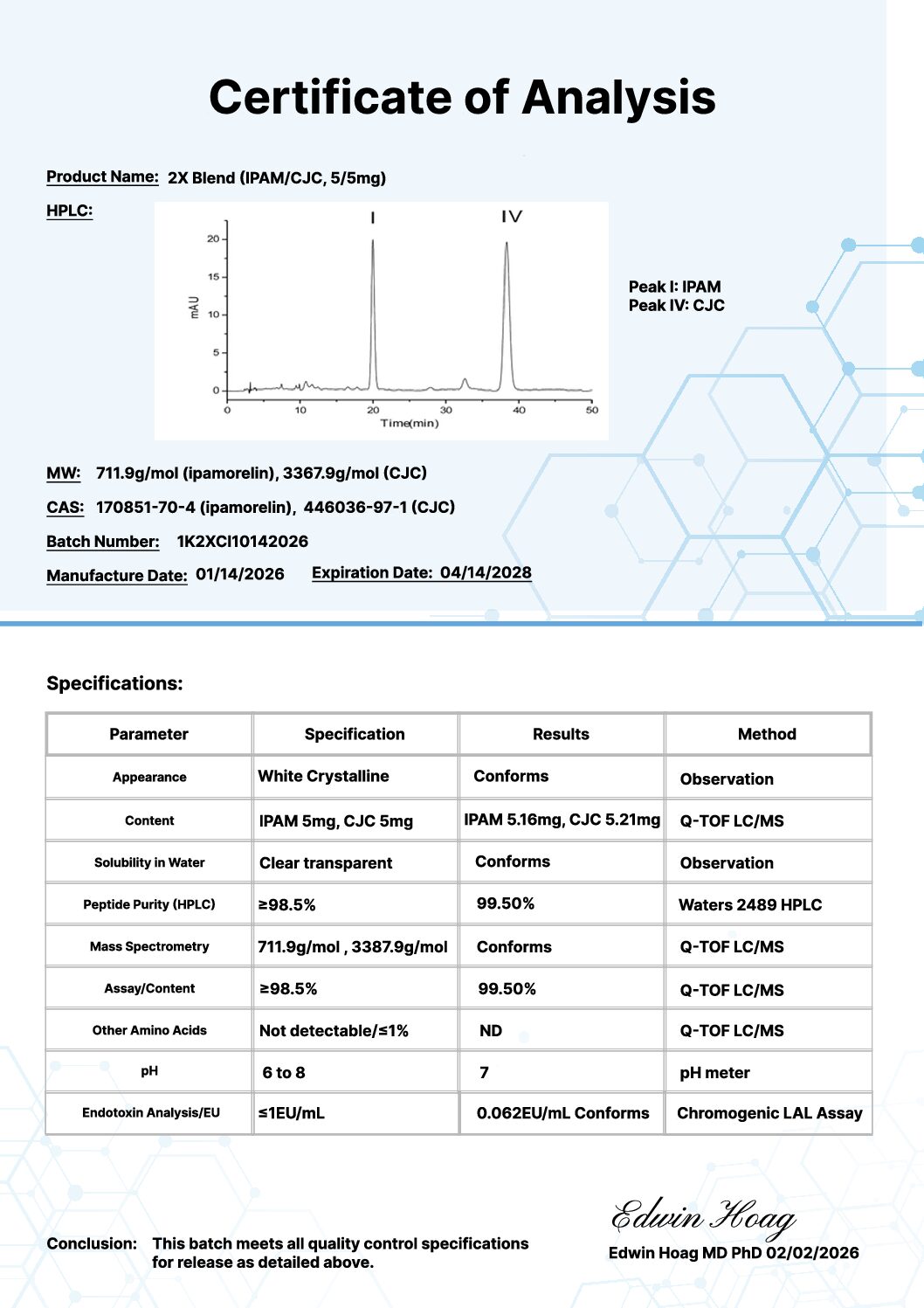
Every batch is independently tested for purity, mass, and endotoxin load. Click any report to view the full analysis.
No. Research peptides supplied by LAR are reference materials for laboratory investigation. They are not approved by the FDA or any national regulatory body for human use.
Yes. Vials ship as lyophilized powder, giving your lab control over solvent selection and final concentration. Reconstitution should follow your laboratory's standard practice.
Each manufacturing batch is tested by an independent third-party laboratory using HPLC-UV analysis. The full report, including chromatogram and mass spectrometry, is available above.
Orders ship within 1–2 business days via discreet packaging.