Your cart is currently empty!.
You may check out all the available products and buy some in the shop.
Continue Shopping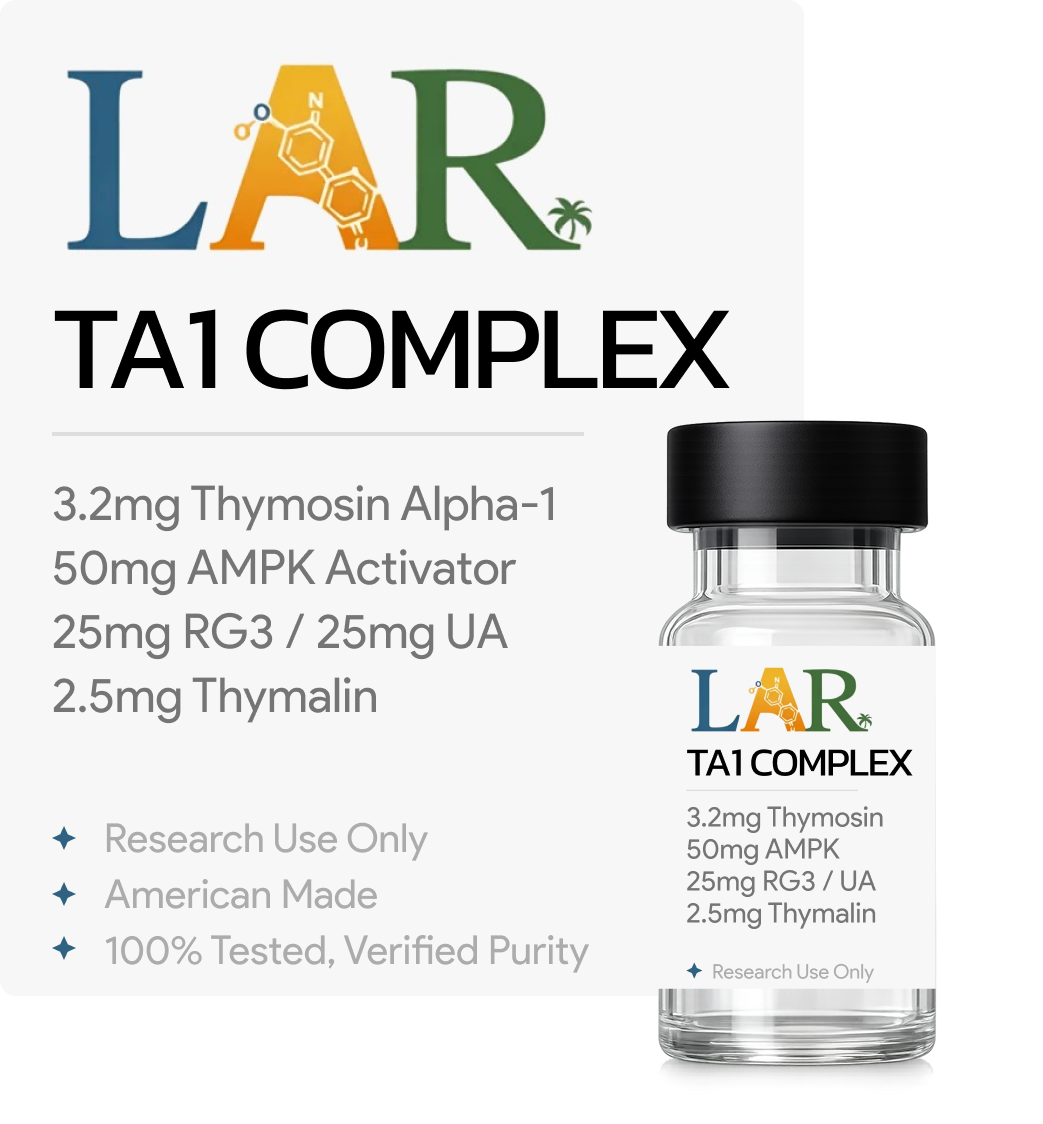
Thymosin alpha 1 is a 28 amino acid peptide with sequence matching the N-terminal fragment of prothymosin alpha, a protein originally isolated from calf thymus. The compound enters immunology research primarily through its effects on plasmacytoid dendritic cells and downstream T-cell activation.
Binding Toll-like receptor 9 on plasmacytoid dendritic cells triggers a signaling cascade that increases type I interferon output and shifts cytokine profiles toward a Th1-biased response. Separate work describes direct effects on T-cell maturation in the thymus and on natural killer cell activity. The combination of receptor effects makes Tα1 useful in research examining innate-to-adaptive immune crosstalk.
Allan Goldstein isolated the parent thymic fraction at Albert Einstein College of Medicine in 1965. His group at George Washington University characterized the 28 amino acid active fragment in 1977. The compound gained regulatory approval for hepatitis B and cancer supportive care in more than 35 countries during the 1990s and 2000s under the brand name Zadaxin, though not in the United States or the European Union.
Published research literature covers the following areas:
LAR supplies this compound as a reference standard to qualified laboratories. No dosing schedules, administration methods, or human-use guidance is provided or implied.
Sealed vial: Stable at refrigerated temperatures (2–8 °C) for up to 24 months. Stable at room temperature (up to 25 °C) for 30 days during shipping.
After opening: Refrigerate at 2–8 °C and use within 30 days. Protect from light. Do not freeze after opening.
Visual check: Solution should remain clear. Discard if discoloration or precipitate appears.
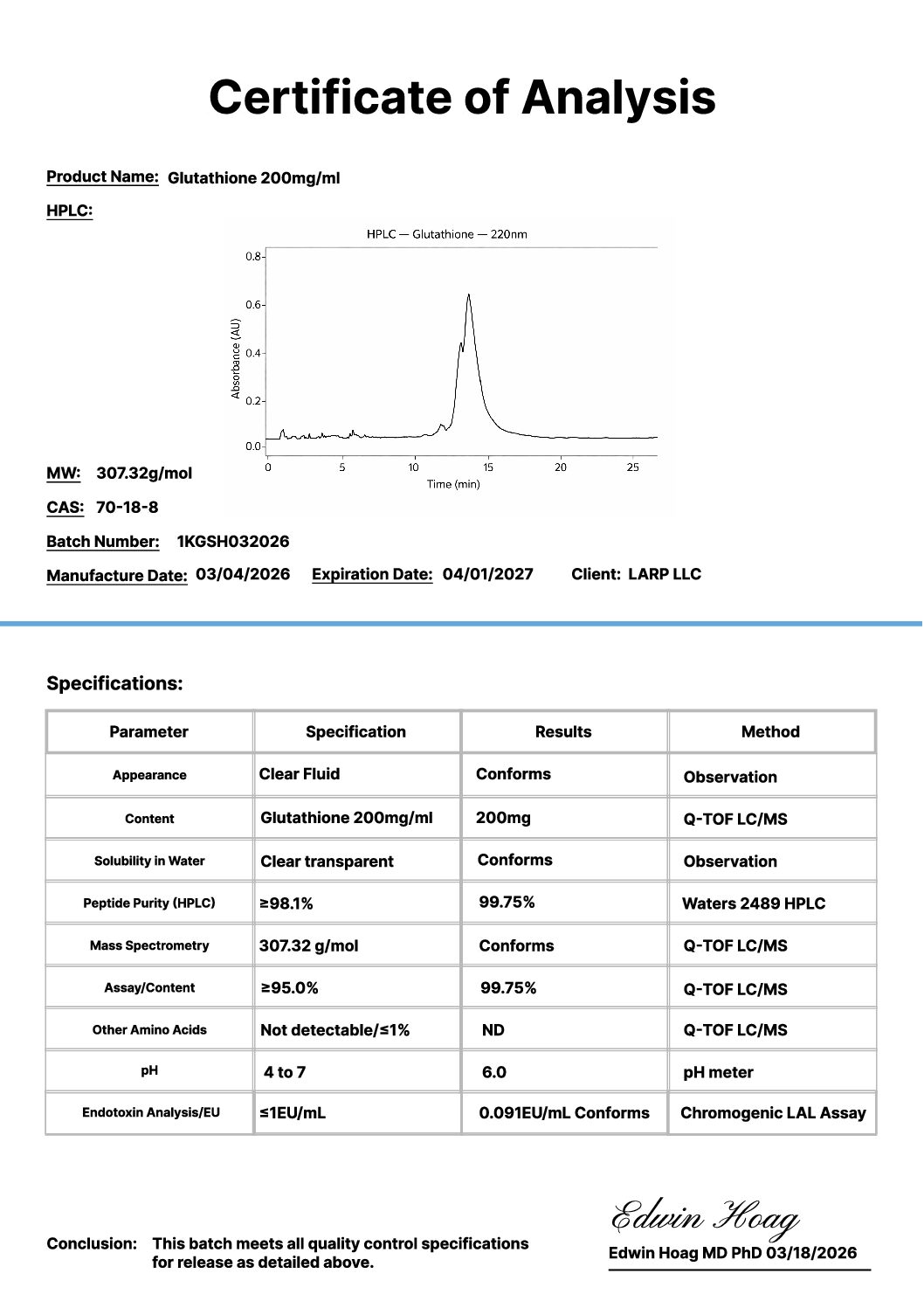
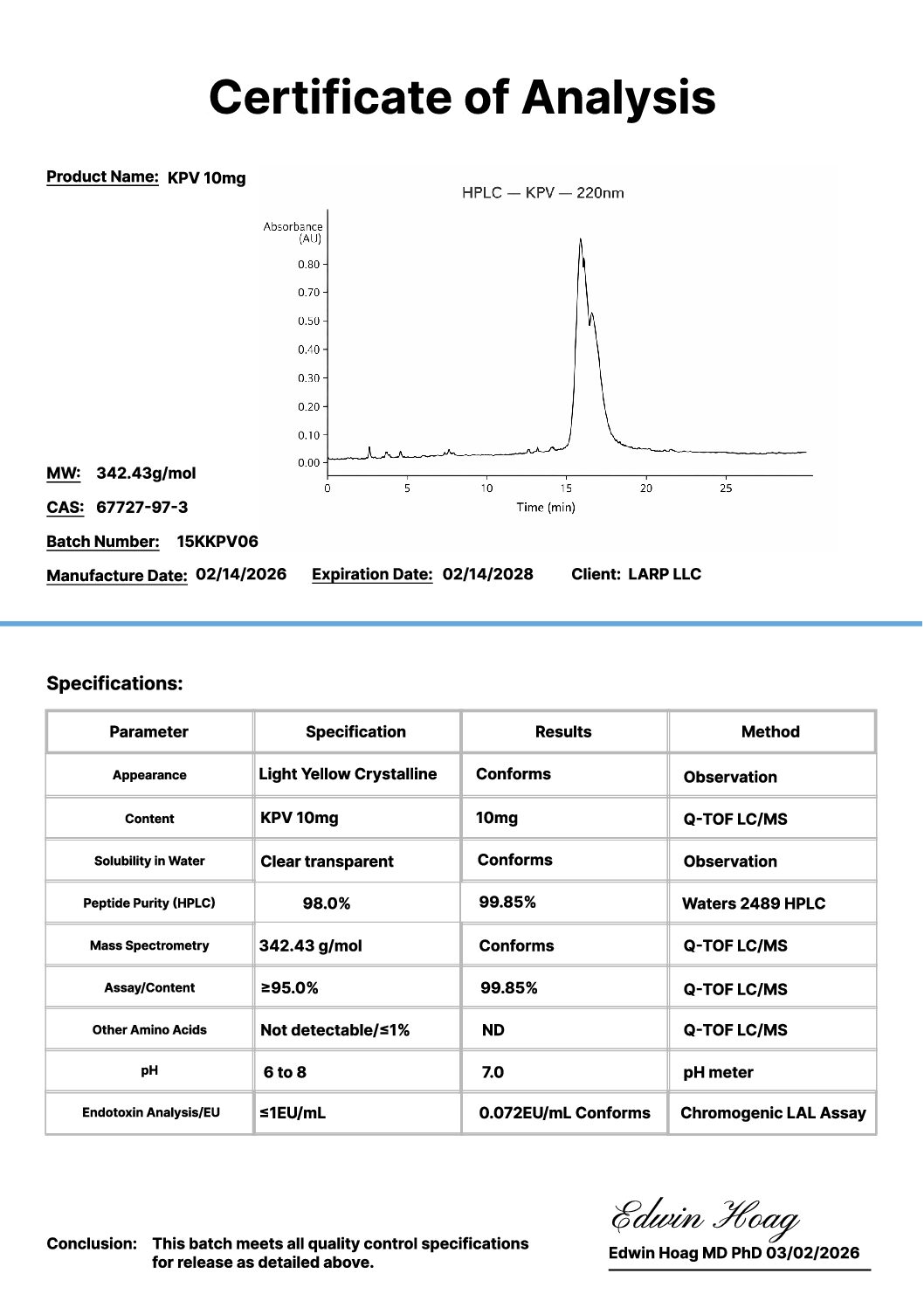
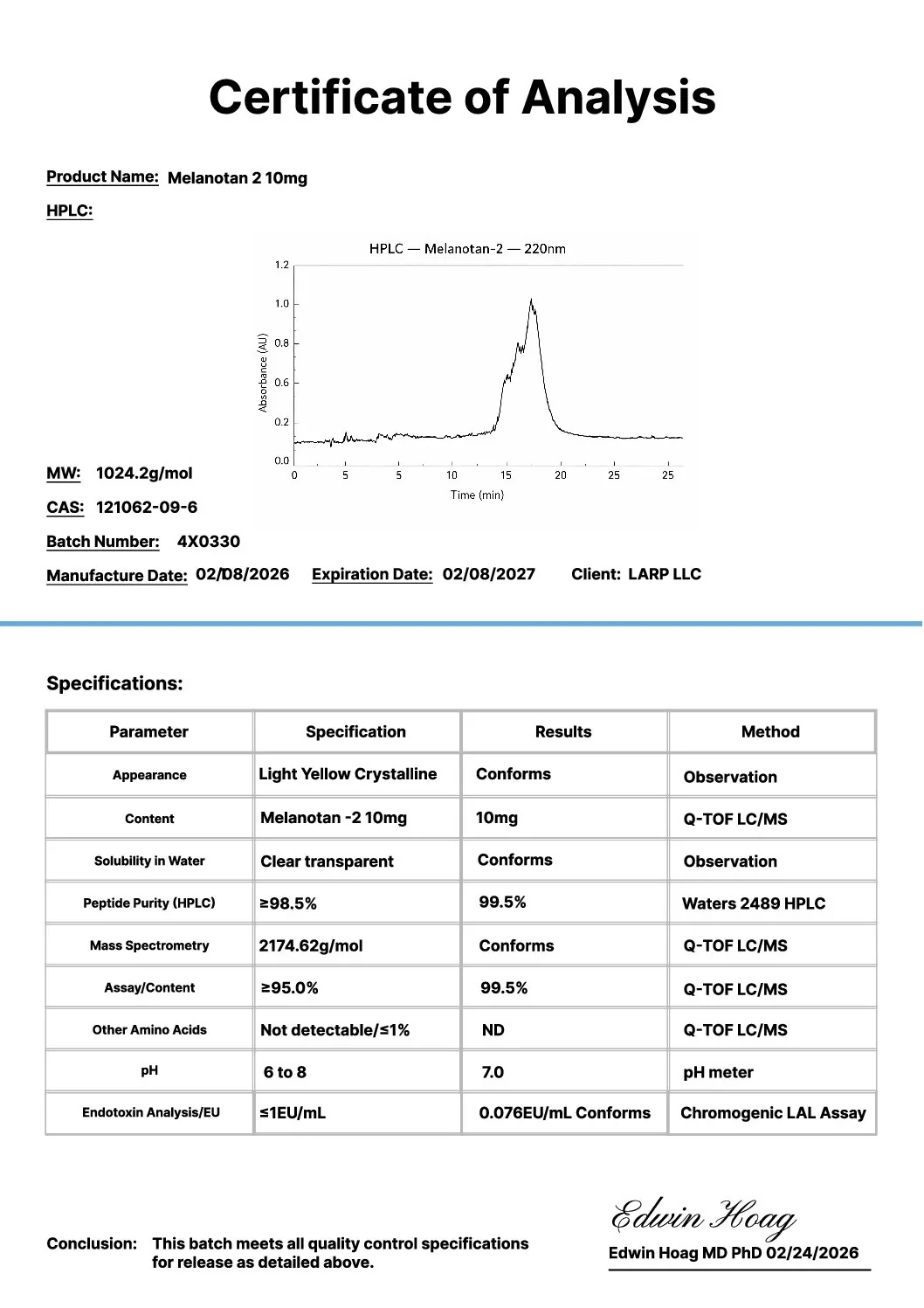
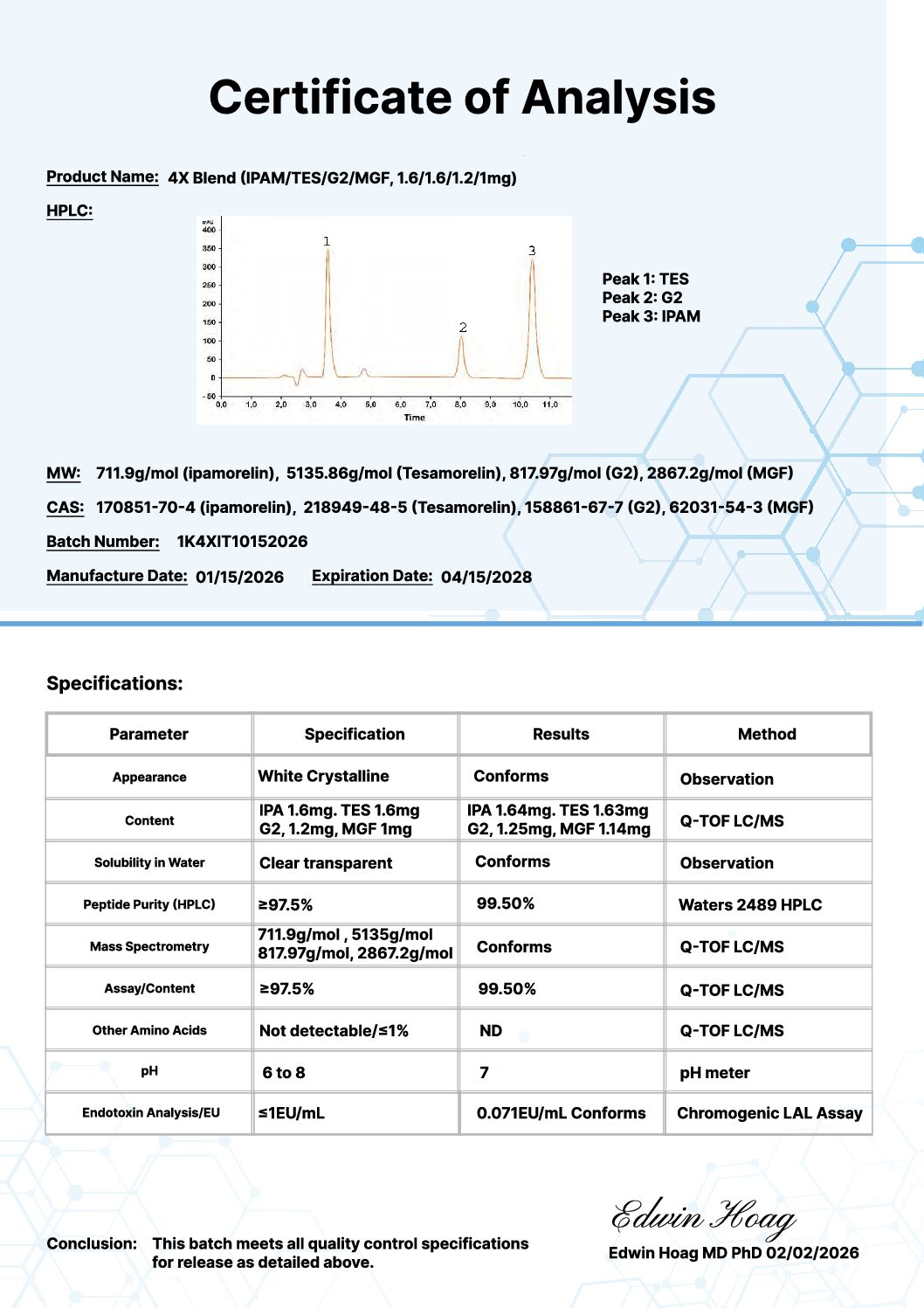
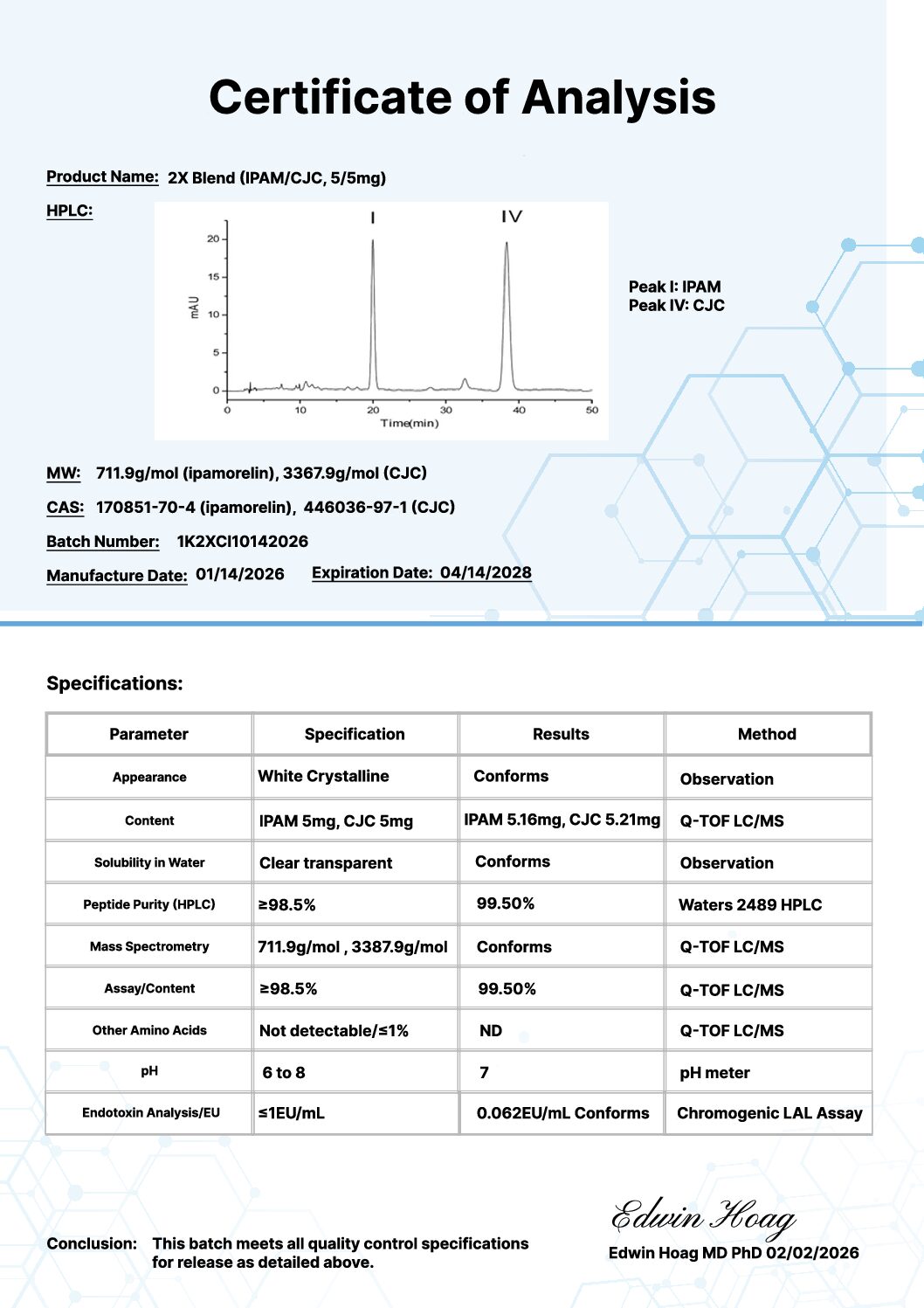
Every batch is independently tested for purity, mass, and endotoxin load. Click any report to view the full analysis.
No. Research peptides supplied by LAR are reference materials for laboratory investigation. They are not approved by the FDA or any national regulatory body for human use.
Yes. Vials ship as lyophilized powder, giving your lab control over solvent selection and final concentration. Reconstitution should follow your laboratory's standard practice.
Each manufacturing batch is tested by an independent third-party laboratory using HPLC-UV analysis. The full report, including chromatogram and mass spectrometry, is available above.
Orders ship within 1–2 business days via discreet packaging.